L-Carnitine (20ML) | Mitochondrial Fatty Acid Transport Research Solution
Product Overview
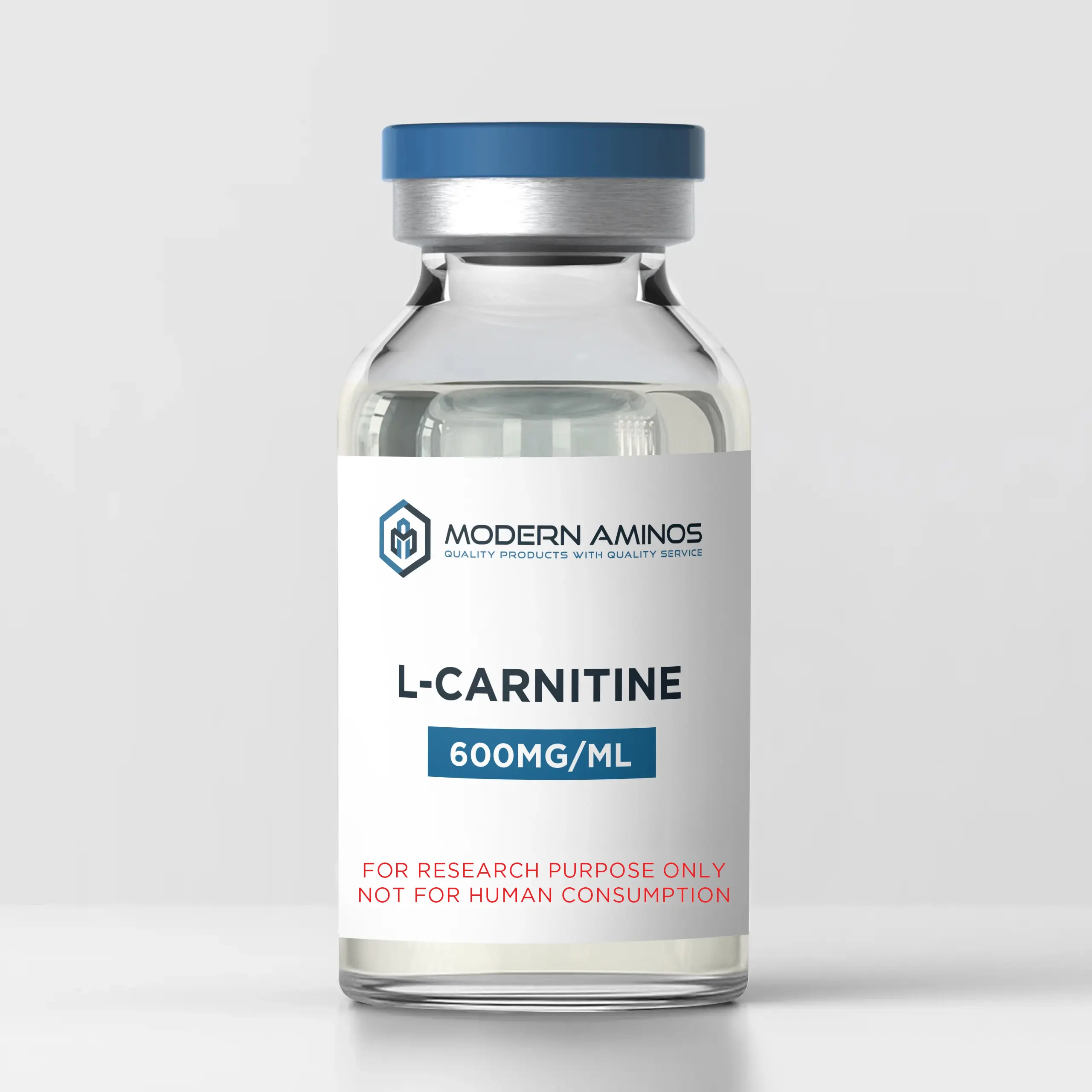
L-Carnitine (20ML) is a laboratory-grade liquid research reagent at 600 mg/ml for research into mitochondrial energy metabolism, long-chain fatty acid transport, and beta-oxidation. L-Carnitine is a quaternary ammonium compound that shuttles long-chain fatty acids into mitochondria for beta-oxidation and ATP production in controlled laboratory models.
Research use only. This product is not intended for human consumption. Published literature cited below refers to L-carnitine generally, not this specific SKU.
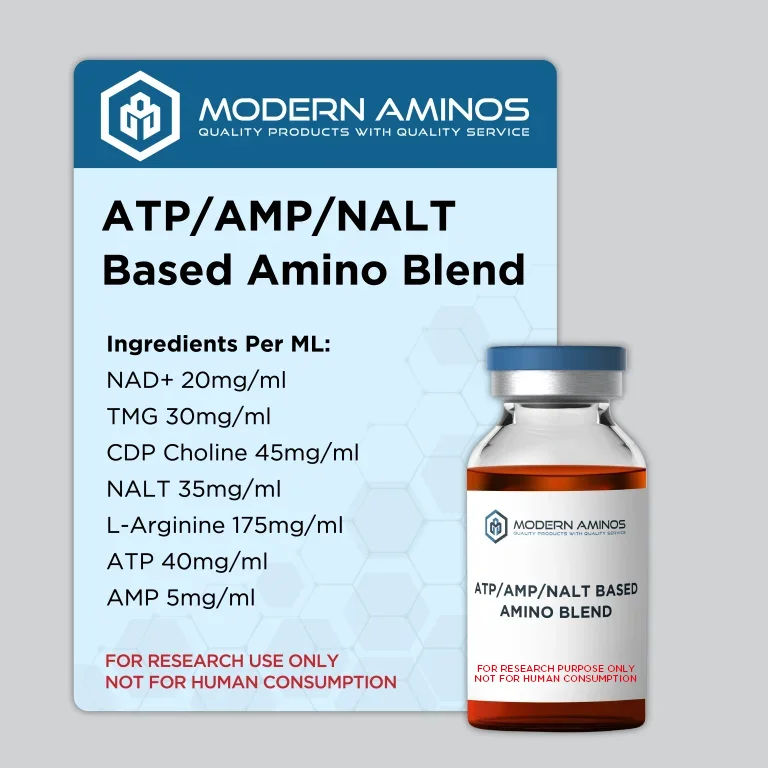
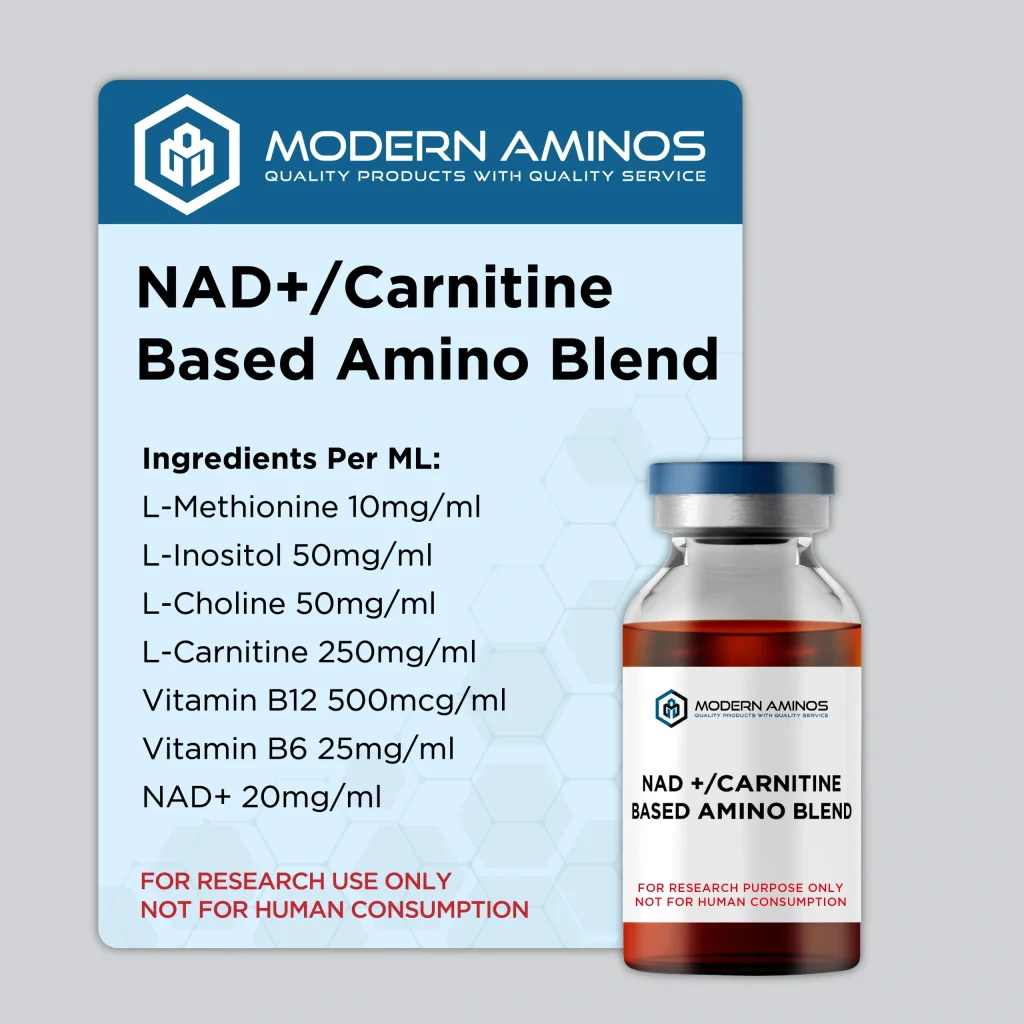
This listing is base L-Carnitine (LC) in a 20ML liquid formulation. For multi-compound carnitine matrices, see the NAD+/Carnitine Based Amino Blend (20ML), Carnitine / Choline Based Amino Blend, and Carnitine + Arginine Based Amino Blend (20ML). Browse related amino acid research compounds and liquid research formulations.
Biochemical Composition & Concentration Profile
| Compound |
Concentration |
Formulation |
| L-Carnitine (LC) |
600 mg/ml |
20ML liquid research vial |
Core Biochemical Mechanisms
- Fatty Acid Transport: L-Carnitine enables facilitated transport of long-chain fatty acids (LCFAs) by forming acylcarnitine, allowing crossing of the inner mitochondrial membrane for energy conversion. Without this shuttle, LCFAs can accumulate in the cytosol as acyl-CoA esters (ScienceDirect review; PMC8910660).
- Acyl Buffer System: Carnitine acetyltransferase (CrAT) reversibly converts accumulated acetyl-CoA to acetylcarnitine during elevated metabolic demand, releasing free CoA and supporting continued aerobic metabolism (PMC8910660).
- Metabolite Clearance: L-Carnitine binds acyl residues from amino acid intermediary metabolism and supports urinary clearance as acylcarnitine esters, modeling detoxification of organic acid intermediates (NIH ODS).
Investigational Forms and Properties
Three principal chemical forms are utilized for distinct research applications. This SKU contains base L-Carnitine (LC) only; ALCAR and PLC are distinct investigational forms discussed for literature context.
| Form |
Chemical Properties |
Primary Research Application Focus |
| L-Carnitine (LC) |
Base form; primary fatty acid transporter. |
Cardiovascular energetics, renal metabolic analysis, and general metabolic flexibility studies. |
| Acetyl-L-Carnitine (ALCAR) |
Highly lipophilic; crosses the blood-brain barrier; acetyl group donor. |
Cholinergic neurotransmission, neural tissue energy supply, and peripheral nerve regeneration models. |
| Propionyl-L-Carnitine (PLC) |
Yields propionate; enhances vascular endothelial NO production. |
Vascular perfusion dynamics and ischemic muscle metabolism. |
Pharmacokinetic Considerations for Experimental Design
Oral L-Carnitine exhibits low absolute bioavailability (5–18% at pharmacological doses) due to saturation of intestinal transport, while intravenous administration achieves nearly complete immediate plasma availability (NIH ODS; PMC8910660). Injectable routes largely bypass intestinal processing associated with gut microbiota-mediated trimethylamine (TMA) and trimethylamine-N-oxide (TMAO) conversion (Nature Scientific Reports).
Published Literature
The following summarizes peer-reviewed literature on L-carnitine and related forms. It does not establish safety or efficacy of this L-Carnitine (20ML) research product in humans.
- In a meta-analysis of acute myocardial infarction (AMI) trials, L-Carnitine doses (2.7 g/day to 6 g/day) were associated with a 27% reduction in all-cause mortality and a 65% reduction in ventricular arrhythmias (DiNicolantonio et al., PMC3043126).
- In the CEDIM 2 trial (AMI), L-Carnitine therapy using IV and oral routes led to reduced 5-day mortality (HR=0.61, p=0.041) (Karger CEDIM 2).
- IV infusion of L-carnitine (0.28 µmol/kg BW/min) in type 2 diabetic patients improved whole-body glucose uptake and glucose oxidation via pyruvate dehydrogenase activation (PubMed 10067662).
- In chronic heart failure (CHF), intravenous L-carnitine twice daily for 7 days yielded 60.9% of the treatment group improving at least one NYHA functional class vs. 44.7% placebo (P=0.012) (trial abstract).
- In oligoasthenozoospermia, a 6-month RCT of oral L-Carnitine and Acetyl-L-Carnitine improved sperm progressive motility, vitality, and reduced DNA fragmentation (Wiley RCT).
- For diabetic peripheral neuropathy, a hybrid IM-then-oral ALCAR protocol achieved improvements in neurophysiological parameters and pain reduction; see FAQ below for protocol detail (PubMed 12455197).
- Long-term Acetyl-L-Carnitine (ALCAR) in Alzheimer’s patients showed slower deterioration across 13 of 14 outcome measures, with advantages in selective attention and verbal memory (PubMed 1944900).
Research References
Frequently Asked Questions
What is the fundamental biochemical function of L-Carnitine in mitochondrial energy systems?
L-Carnitine shuttles long-chain fatty acids (LCFAs) across the inner mitochondrial membrane, an indispensable step for beta-oxidation and ATP generation. Without L-Carnitine, LCFAs can accumulate in the cytosol and impair metabolic flexibility (PMC8910660).
How does Acetyl-L-Carnitine (ALCAR) differ from the base L-Carnitine (LC) form for neurochemical studies?
Acetyl-L-Carnitine (ALCAR) is highly lipophilic and crosses the blood-brain barrier efficiently. In the central nervous system, ALCAR acts as an acetyl group donor relevant to acetylcholine synthesis pathways in investigational models (PubMed 1944900).
Why is the systemic bioavailability of oral L-Carnitine significantly lower than the injectable route for experimental models?
Oral L-Carnitine absolute bioavailability is typically 5–18% at pharmacological doses vs. nearly 100% via injectable routes, largely due to saturation of intestinal transport at experimental concentrations (NIH ODS; PMC8910660).
What administration protocol has been shown to rapidly achieve therapeutic tissue concentrations in nerve regeneration studies?
A hybrid protocol in diabetic neuropathy literature started with intramuscular ALCAR (1,000 mg/day for 10 days), then oral ALCAR (2,000 mg/day for 355 days), combining immediate tissue delivery with sustained oral maintenance. Published outcomes included improved neurophysiological parameters and pain reduction (PubMed 12455197).
How does the administration route influence the production of the gut metabolite Trimethylamine-N-oxide (TMAO)?
Oral administration is associated with gut microbiota metabolism of unabsorbed L-Carnitine to trimethylamine (TMA), converted hepatically to TMAO. Intravenous delivery largely bypasses intestinal processing, a consideration in studies modeling TMAO-related cardiovascular endpoints (Nature Scientific Reports).
Why Choose Modern Aminos?
Modern Aminos is the best place to buy peptides online. We are a trusted Research Chemicals vendor with formulations that meet industry standards and comply with quality regulations in Europe, USA, and Canada to ensure product safety and efficiency. If you’re looking to buy research chemicals online, our one-stop-shop offers a wide range of third-party tested, high-quality research chemicals made in the USA — including top-tier peptides, nootropics, amino acids, research oils, liquid research compounds, and more! Our products are routinely and rigorously tested for purity, with COAs verifiable through third-party laboratory testing services. We also maintain reliable customer services to facilitate smooth consumer experience from pre-sale inquiries to after sales concerns. For questions about our products, you may contact us through any the following email addresses: USA – [email protected] Europe – [email protected]
PROPERTIES
| Other Names |
levocarnitine, (R)-carnitine, 541-15-1 |
| CAS Number |
541-15-1 |
| IUPAC Name |
(3R)-3-hydroxy-4-(trimethylazaniumyl)butanoate |
| Molecular Formula |
C7H15NO3 |
| Molecular Weight |
161.1989 g·mol-1 |
| Available Dosages & Forms |
600mg/ml |
| Forms and sizes |
white lyophilized/freeze-dried powder, 5mg vial |
| Storage |
Store in a dry place between 2 to 8 degrees Celsius |
| Shelf life |
Up to 36 months with proper storage |